
By: Jim West
Directed by: Joachim Rønning
Written by: Jesse Wigutow & David DiGilio
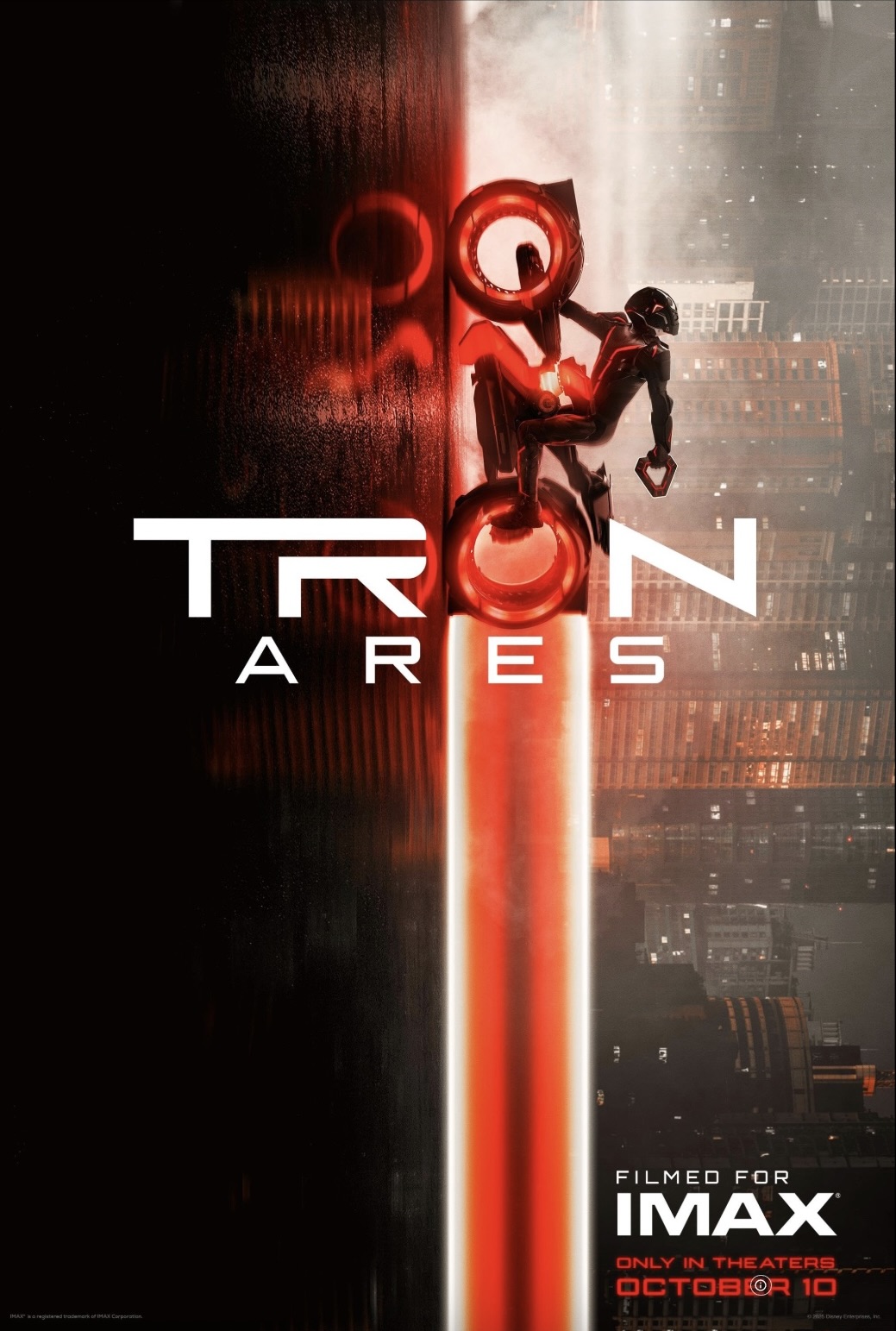
Tron hit the film scene in 1982 and gave us a perspective of computer programs in a virtual reality that existed as sentient entities. Tron: Legacy (2010) took a huge step forward, carrying the weight of a franchise that was never about spectacle alone, but now we may have reached the spectacle phase. Starring Jared Leto alongside a capable supporting cast that ultimately isn’t given enough to work with, the film attempts to evolve the ideas introduced in the original Tron—a story fundamentally about identity, control, and humanity’s uneasy relationship with the systems it creates. Where the 1982 Tron used the digital world as a metaphor for ownership, purpose, and rebellion within rigid systems, Ares gestures toward similar themes but struggles to translate that philosophical backbone into a grounded, character-driven narrative that feels earned in a modern, real-world context.
Here come the spoilers…
At the center of this review’s critique is Leto’s Ares, a character meant to embody existential threat and purpose but who instead feels emotionally hollow. The performance lacks conviction, not as an intentional expression of otherness, but because the characters aren’t given a clear philosophical anchor to fight for or for the audience to wrangle with. The same absence of purpose bleeds into the rest of the cast, whose motivations are thin and largely reactive, with characters responding to events rather than driving them. When neither the antagonist nor the protagonists truly believe in what they’re doing, the tension evaporates, and the central conflict feels weightless.
The plot only amplifies those problems by abandoning realism at critical moments. Once lightcycles are openly tearing through public streets, the film asks the audience to accept that police—and eventually the military—would stand by as public destruction unfolds. That kind of unchecked chaos would trigger immediate intervention, shutdowns, or forceful containment. The failure to acknowledge this reality shatters suspension of disbelief and makes the world feel artificial rather than immersive.
What makes this particularly frustrating is how easily the story could have been strengthened. A more grounded approach would have involved the military allowing limited destruction in exchange for access to the technology, especially once Ares achieves the permanence code. Governments tolerating controlled chaos for strategic advantage is believable and morally complex. Ignoring institutional response altogether is not.
The villain arc also suffers from a lack of focus. Evil exists primarily in a conceptual sense rather than in execution, with no clearly articulated ideology or endgame. The original Tron succeeded because its conflict mirrored real anxieties about control, autonomy, and systemic oppression. Ares hints at similar ideas but never commits, leaving the antagonist feeling more like a narrative placeholder than a driving force.
Equally missing is a compelling greater-good narrative for the protagonists. They run, resist, and react, but they never truly stand for anything more concrete. Without a clear vision of what their victory actually achieves—or why it matters beyond stopping the immediate threat—the story becomes motion without meaning.
In the end, Tron: Ares isn’t undone by its visuals or its ambition; it’s undone by its lack of purpose. The ingredients for a thoughtful continuation of the franchise are present, but without grounded realism, character conviction, and a tightened philosophical core, the film collapses under its own weight. Tron: Ares wasn’t a story that needed to be bigger—it needed to be smarter.
Thanks for reading Writing Movie “WRONGS.”